
The Future of Off-the-road Tires to 2031
This report gives you the data and forecasts to spot growth opportunities by end use and region, and to understand how emerging tire technologies will change design priorities through 2031.
Two shocks in quick succession. First came the trade war that began in 2025, which hit tire makers, equipment producers and every end-use sector at once. Then, in 2026, conflict in the Middle East disrupted demand in the region directly.
The wider damage came through energy. OTR tires rely on oil-derived materials and chemicals, so input costs and availability took a hit. The machines that run on these tires burn diesel, and sectors like farming depend on fertilizer. The impact reached every link in the chain, from raw materials to the end user.
Recovery will take time. Even if the conflict is brought to an end, many of its effects are already in motion and will persist through the early years of the forecast. For OTR tire makers and their customers, that means higher production costs, longer lead times and more volatile demand from region to region. Geopolitical risk also remains very high. Businesses that build in flexibility will be better placed than those planning for a single outcome.
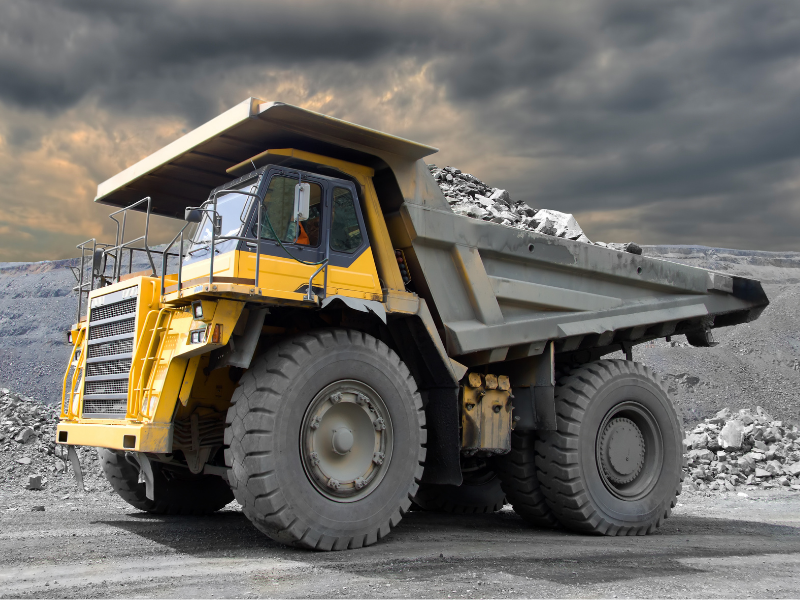
Mining, construction and ports will lead. Together they form the largest end-use segment, worth $16.8 billion in 2026 and growing at 5.1% a year to $21.5 billion by 2031, slightly ahead of the market overall.
The energy transition is a big part of the story. Electric vehicles and data centers need large volumes of metals and minerals, and that is steering mining investment. Beyond that, aggregates mining for construction, public and private infrastructure spending, warehouse construction and expanding port operations all add demand.
Population growth underpins demand, and Asia-Pacific is mechanizing its farms at a rising rate. Machinery is also getting bigger and heavier. Sustainable farming is shaping product design too: tires that minimize soil compaction help protect soil health and support carbon sequestration. Manufacturers offering technically advanced solutions here are well placed.
The industry is in a good position overall. Global leaders such as Bridgestone, Michelin, Yokohama and Continental have the scale to absorb disruption. BKT in India and other Asian producers are well positioned regionally.
We also expect consolidation to continue, particularly at regional level; Yokohama’s expansion is a recent example. As trade becomes less predictable, markets are regionalizing, and supply chains for oil, chemicals and finished tires are following suit. Scale and a strong local footprint are becoming real advantages.
Government spending will benefit specific OTR end uses, from infrastructure projects to agricultural subsidies, although much of it is debt-fuelled and inflationary.
Regulation is a positive force too. Pressure on emissions, materials and end-of-life management is pushing progress in technology and sustainability. On balance, despite the uncertainty around trade and geopolitics, we expect government policy to support market growth.
The growth story is intact, but the route has changed. Expect higher costs, longer lead times and more volatile regional demand in the near term, alongside supply chains that are increasingly regional.
The fundamentals still point upward: technology advances, infrastructure spending, the energy transition, agricultural support and mechanization. Companies that plan for volatility and align with those drivers will be best placed as growth picks up toward 2031.
The global OTR tire market will grow from $35.5 billion in 2026 to $45.2 billion in 2031, at 4.9% a year. Trade disruption and conflict will keep costs, lead times and regional demand volatile in the near term, while tire management, consolidation and regional supply chains reshape how the industry competes. The Future of Off-the-road Tires to 2031 explores all of these trends in depth. It provides market sizing and five-year forecasts by end-use sector and region, analysis of the drivers and risks shaping demand, and profiles of the market's leading players. It is an essential guide for tire manufacturers, equipment makers, suppliers and investors planning for the years ahead.
Arthur Mayer is an independent tire industry researcher and writer who has supported Smithers’ market reports and consulting projects since 2014. His research focuses on intelligent tires and tire inspection systems, and he has spoken on these topics at Smithers conferences and trade events across Asia-Pacific. He previously held market research, competitive intelligence and strategic planning roles at an international tire distributor, and holds an International MBA from the University of South Carolina.