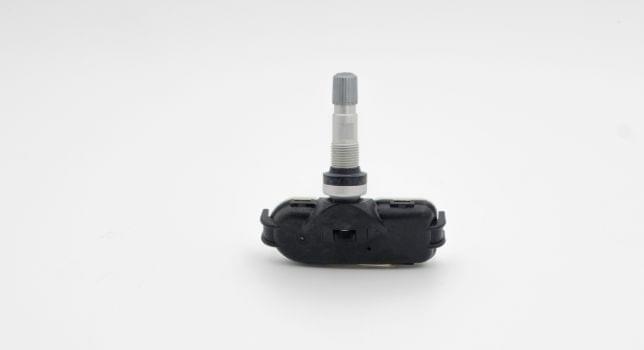
The Recreational Vehicle Industry Association (RVIA) Board of Directors recently approved a mandate requiring all new towable RVs to be factory-equipped with a Tire Pressure Monitoring System (TPMS).
For development, systems, and quality engineers working within the trailer manufacturing and TPMS component supply chains, this represents a transition from treating TPMS as an optional dealer accessory to managing it as a fully integrated, critical assembly line component.
This brief Q&A from our General Manager of Product Testing, Jeff Andrasik, breaks down the regulatory timelines, compliance frameworks, and some of the key hardware durability testing requirements.
What is the new requirement for TPMS used in RV trailer applications, and when will it come into effect?
The RVIA Board of Directors approved a mandate requiring a Tire Pressure and Temperature Monitoring System (TPMS) to be factory-installed on all new towable RVs.
The regulatory footprint defines a compliant system under three core criteria:
- It must directly or indirectly sense tire pressure and temperature (or actively evaluate pressure variation over time).
- It does not restore the measured pressure to its specified level.
- It must automatically signal the driver when safety thresholds are breached, without requiring manual driver review of the display.
Key Deadlines and Timelines
- Model Year Implementation: The mandate is strictly tied to the start of the 2028 Model Year (MY2028).
- Calendar Year Rollout: Because RV model-year changeovers typically occur ahead of the calendar year, physical implementation and inspection enforcement will begin on factory floors during the 2027 calendar year.
- Vehicles Impacted: The mandate applies broadly to towable recreational vehicles (such as travel trailers, fifth wheels, and toy haulers) under 26,000 pounds Gross Vehicle Weight Rating (GVWR).
How will compliance be monitored and audited?
Because this is implemented as an RVIA Program Requirement, compliance will be policed directly at the manufacturing facility rather than through post-market regulatory actions.
The Auditing Mechanism
- On-Site Inspections: RVIA field inspectors conduct unannounced, periodic visits to manufacturing facilities. During these visits, inspectors will physically verify the presence of functional, standard-equipped TPMS hardware on the production line.
- VIN-Level Tracking: Inspectors will cross-reference the manufacturer’s model-year changeover declarations with Vehicle Identification Numbers (VINs). If a unit is designated as an MY2028 chassis, its corresponding Bill of Materials (BOM) and physical assembly must feature a compliant TPMS.
- Documentation Verification: OEMs must be prepared to supply engineering documentation verifying that the installed TPMS meets the designated performance standards outlined in the mandate.
What testing standards are called out under this new requirement?
The technical foundation of the RVIA mandate relies on a multi-layered hierarchy of standards.
The primary standard referenced is SAE J3309 (Surface Vehicle Recommended Practice, Tire Pressure and Temperature Monitoring Systems for Trailers under 26,000 Pounds GVWR).
Because SAE J3309 acts as a functional system standard, it does not detail new individual environmental or material test procedures. Instead, it references and utilizes two highly rigorous automotive and heavy-duty standards for environmental and material validation:
- SAE J1455 - Recommended Environmental Practices for Electronic Equipment Design in Heavy-Duty Vehicle Applications: Establishes the mechanical shock, multi-axis random vibration, temperature-cycling, and electrical transient baselines that the electronics must survive.
- SAE J2721 - Recommended Corrosion Test Methods for Commercial Vehicle Components: Dictates cyclic laboratory corrosion tests to verify the integrity of exposed metal parts (like valve stems) against aggressive road de-icers.
What are the specific test methods within SAE J3309, and what do they involve?
TPMS assemblies must undergo rigorous laboratory testing. The testing protocols focus heavily on physical durability, pressure measurement accuracy, environmental resilience, and RF reliability.
A. Temperature & Pressure Verification Tests
These tests ensure the sensors provide accurate readings under extreme weather variations, avoiding false alerts or missed critical events.
- How it is conducted: The sensor and transmitter assemblies are placed inside an environmental chamber connected to a calibrated reference pressure system.
- The Profile: The chamber temperature is cycled across a specific operating spectrum, typically from -40°C to 85°C (-40°F to 185°F).
- Required Metric: While operating at these extremes, the sensor must maintain a strict pressure measurement accuracy, typically within a tolerance of +/- 1 to 2 PSI, and temperature readings within +/-5°F.
B. Mechanical Durability & Vibration Tests (via SAE J1455)
Unlike passenger cars, towable trailers often use stiff, leaf-spring suspension systems that transmit intense, undampened road shock directly to the wheel assemblies.
- Shaker Table Profiles: Using the heavy-duty vehicle profiles defined in SAE J1455, sensors are mounted to a laboratory shaker table and subjected to random vibration testing in each of the three mutually perpendicular planes. This simulates thousands of hours of high-frequency road vibration.
- Mechanical Shock Testing: Sensors must survive severe impact simulations (half-sine wave pulse profiles) to ensure internal components, solder joints, and battery terminals do not fracture when hitting a pothole at highway speeds.
- Centrifugal Force Validation: Sensors must be rotated at high speeds to simulate vehicle operation up to 100 mph. The physical housing, internal circuitry, and valve-stem interfaces must withstand these continuous radial forces without structural failure.
C. Environmental & Corrosion Testing
Wheel wells are continually exposed to high-pressure water spray, mud, road salt, and synthetic chemical de-icers. A few different test methods are used to evaluate performance against these potential corrosion sources.
- Ingress Protection (IP) Testing: To prevent water intrusion during stream crossing or high-pressure washing, the sensor enclosures are tested to meet IP67 (temporary immersion) or IP69K (high-pressure, high-temperature washdown) standards.
- Corrosion Testing: There are a few test specifications within the standard that companies can use depending on the component and use case. SAE J2721 provides a variety of test methods for commercial vehicle components. For wheels specifically, it includes a cyclic testing method that exposes the components to alternating cycles of corrosive chemical spray (e.g., magnesium chloride), high humidity, and drying phases. SAE J2657 utilizes ASTM B117, which is a salt fog exposure test that validates the metal valve stems and sensor body against galvanic corrosion.
- SAE J2657 also includes both thermal shock, typically ranging from -40°C to 125°C (-40°F to 257°F), and humidity and immersion resistance testing by placing components in high humidity chambers and submersion in water to check for moisture intrusion.
D. RF Reliability and Latency (Startup Delay)
Because the wireless transmitter resides on a separate trailer frame that can extend up to 40+ feet from the towing vehicle’s controls, signal path degradation is a primary design concern.
- Signal Range & Attenuation: Testing evaluates the RF propagation of the sensors through structural mock-ups of typical RV body compositions (wood framing, aluminum skins, and steel chassis). If transmission losses exceed safe operational limits, a signal booster/repeater must be specified.
- Latency / Cold Start Testing: The standard evaluates how quickly the receiver registers the tire state upon vehicle ignition. A compliant system must dynamically identify all tire pressures within a strict window (typically under 3 minutes of vehicle startup or initiation of motion) and immediately alert the driver of a signal loss.
How can manufacturers begin preparing themselves for compliance relative to developing a testing plan?
To ensure compliance before MY2028 production begins in 2027, both RV OEMs and TPMS suppliers should align on a structured testing and integration plan. For TPMS component manufacturers, it begins with setting up a testing program to qualify for supply consideration with RV trailer manufacturers. Instead of relying on self-certification for physical durability, you can secure formal, third-party laboratory test reports validating that your hardware survives the rigorous testing procedures under SAE J3309.
The Smithers team can review your specific sensor’s design and testing requirements to design a program that supports your end goals. And with years of validating tier 1 components for high-volume automotive OEMs, our experts bring a wealth of knowledge in design and production-validation stages of testing. Contact us today to get started.