Selecting the right elastomer is rarely a matter of choosing the 'best' material. Every application places different demands on a
rubber component, whether that is flexibility, strength, durability, chemical resistance, processing characteristics or cost. The challenge for engineers and product developers is understanding how these requirements interact and selecting the material that delivers the right balance of performance for the intended application.
Natural rubber remains one of the most widely used elastomers and continues to be in demand alongside a broad range of synthetic alternatives. Each material offers distinct properties that make it suitable for different applications, and understanding those differences is fundamental to making informed material decisions.
Why Natural Rubber Still Plays a Key Role
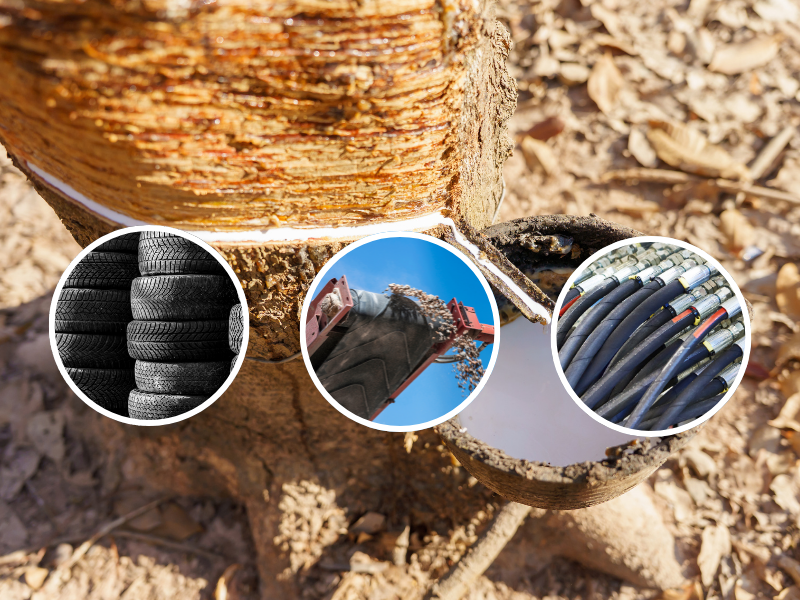
A familiar example can be found in the modern tire. While synthetic elastomers are commonly used in tread compounds to optimise grip, wear and rolling resistance, natural rubber continues to be the majority polymer type in the compounds of the tire's carcass. Similar examples can be found across automotive, industrial, construction and consumer applications, where natural rubber still provides a combination of properties that can be difficult to achieve with any of the synthetic rubber polymers.
Derived from the latex of the Hevea Brasiliensis tree, natural rubber offers a balance of elasticity, resilience, tensile strength and resistance to fatigue. These characteristics make it particularly suited to applications subject to repeated movement, high loads or dynamic stresses.
The ability of natural rubber to recover from deformation with minimal permanent set makes it valuable in components such as anti-vibration mounts, bridge bearings, suspension bushings, seals and elastomeric springs. Its exceptionally high tensile strength supports demanding applications including conveyor belts, transmission belts and tires, while excellent resistance to crack growth and tearing contributes to long service life in products such as slurry hoses, tank linings and industrial flooring.
Natural rubber can also offer manufacturing advantages in certain applications. Its high tack in the uncured state enables effective bonding to reinforcing materials such as steel and textile cords, enabling the manufacture of composite products including tires, hoses, belts and gaskets.
Performance Is Only Part of the Decision
While mechanical performance is critical, selecting an elastomer involves many other considerations. Environmental exposure, operating temperature, chemical compatibility, expected service life, manufacturing processes, sustainability objectives and overall cost all influence material selection.
Natural rubber, for example, is sourced from a renewable raw material, yet its market price can fluctuate due to global demand, crude oil prices, weather conditions affecting plantations and wider supply chain pressures. Likewise, while natural rubber offers strong performance in many dynamic applications, some synthetic elastomers can provide superior resistance to heat, ozone, oils or aggressive chemicals, depending on the service environment.
Rather than viewing materials as direct competitors, it is more useful to consider them as complementary solutions, each suited to different engineering challenges.
Making Evidence-Based Material Decisions
Effective material selection relies on understanding how a material performs within its intended application, rather than relying solely on assumptions or material properties. Laboratory testing,
material characterisation and performance evaluation all provide evidence needed to assess how an elastomer will behave under real operating conditions and whether it is suitable for its intended service environment.
This evidence-based approach becomes increasingly important as manufacturers seek to improve product performance, reduce risk and balance cost, durability and sustainability. Selecting the right elastomer often requires understanding not only the capabilities of individual materials, but also the trade-offs involved in different formulation and design choices.
The Value of Materials Expertise
Material selection is rarely a one-size-fits-all decision. Understanding how different elastomers perform under real operating conditions is essential to balancing performance, durability, manufacturability and cost.
By combining materials expertise with independent testing and performance evaluation, manufacturers can make informed decisions based on evidence, helping reduce development risk and optimise long-term product performance.
This is where working with an
independent materials testing and consultancy partner can help manufacturers make more informed, evidence-based decisions throughout the product development lifecycle.
How Smithers Can Help
Selecting the right elastomer requires more than comparing material data sheets. Understanding how a material will perform within its intended application often requires a combination of technical expertise, independent testing and practical engineering insight.
Smithers supports manufacturers throughout the product development lifecycle, helping them evaluate materials, understand performance,
investigate failures and make informed
material selection decisions. Our ISO 17025 accredited laboratories provide
chemical characterisation,
materials properties testing and
environmental resistance testing, while our rubber consultants work alongside clients to solve complex engineering challenges, investigate failures, optimise formulations and validate product performance.
Whether developing a new product, comparing materials or investigating in-service performance, Smithers provides the independent data and technical expertise needed to support confident, evidence-based decisions.