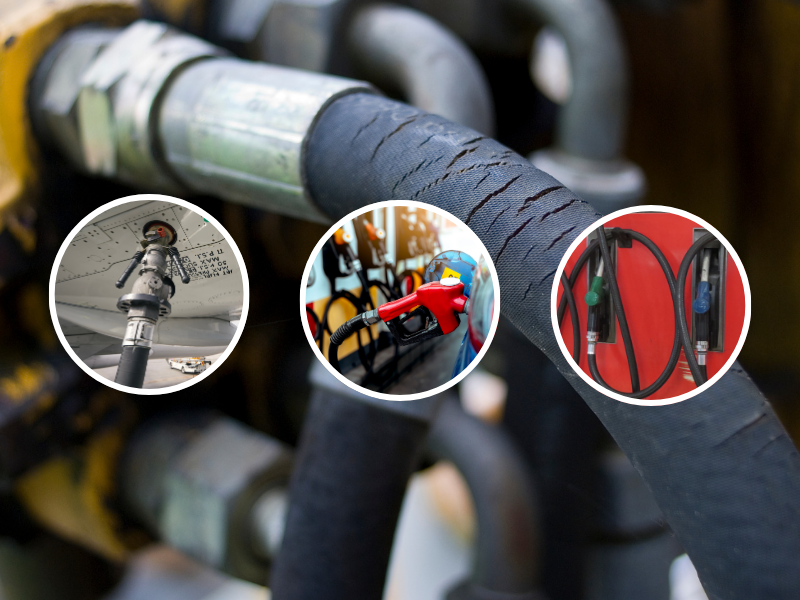
Rubber components are widely used in fuel-handling applications, from seals and hoses to gaskets and other critical components. During service, these materials may be exposed to fuels such as petrol, diesel, biodiesel and ethanol blends, which can affect their long-term performance.
The effects of fuel exposure can depend on both the fuel composition and the rubber formulation. Some elastomers, such as nitrile rubber (NBR) and fluorocarbon rubber (FKM), are selected for their fuel resistance, while others may be more susceptible to changes when exposed to hydrocarbons or fuel additives. Interactions could result in swelling, hardening and cracking, which may lead to changes in mechanical properties and degradation, greatly affecting component reliability and service life.
As fuel formulations evolve, understanding how fuels interact with rubber materials is increasingly important. Modern fuels containing bio-derived components or alternative additives may behave differently from traditional petroleum-based fuels, creating new compatibility considerations.
Investigating Fuel-Rubber Compatibility
When a rubber component experiences unexpected performance issues, understanding the interaction between the fuel and material can help identify potential causes. Depending on the issue and samples available, questions may include:
- Is the rubber material suitable for the fuel environment in which it is being used?
- Has fuel exposure caused chemical changes to the rubber?
- Are contaminants or unexpected compounds present in the fuel or rubber?
- Could a change in fuel composition be contributing to a change in component performance?
- Are compounds from the fuel present within the rubber following exposure?
At Smithers, answering these questions may involve chemical analysis and physical testing, with input from our expert consultants, depending on the issue and samples available.
How Chemical Characterisation Can Support Investigations
Techniques such as gas chromatography coupled with mass spectrometry (GC-MS) can provide detailed information about the chemical composition of complex samples. For fuel-rubber investigations, this may include characterising fuel samples or identifying volatile and semi-volatile compounds within rubber materials.
GC-MS can help identify compounds that may be relevant to an investigation, or detect compounds within rubber that could indicate contamination, extraction of formulation components or degradation-related products. Comparing samples before and after exposure, or between materials that have performed differently, can also help identify chemical differences associated with the issue.
Chemical analysis is one part of a wider investigation, and the most appropriate approach will depend on the material, fuel, issue being investigated and samples available. Combining characterisation with relevant material or performance testing can provide stronger evidence around the likely cause of a compatibility or failure issue.
Applications of Fuel-Rubber Characterisation
Smithers experts can support clients with a range of fuel-rubber compatibility, performance and investigation needs, including:
- Material selection: generating evidence to support selection of rubber materials for specific fuel environments
- Compatibility assessment: investigating how a rubber responds to exposure to a particular fuel or fluid
- Degradation studies: identifying chemical changes associated with fuel exposure
- Failure investigation: examining failed or degraded components for chemical evidence that may help determine the probable cause
- Quality investigations: comparing materials, formulations or batches where differences in composition may contribute to variations in performance
How Smithers Can Support Fuel-Rubber Investigations
Smithers combines established analytical chemistry expertise with extensive experience in rubber and polymer materials, enabling us to investigate fuel-rubber interactions using complementary analytical and testing capabilities.
- Chemical characterisation: Techniques including GC-MS can help investigate the composition of rubber or fuel samples, identify unexpected compounds or contamination, compare materials and support failure investigations. Fuel analysis can form part of the wider investigation where composition is relevant to the issue
- Fluid compatibility testing: Where the question relates to material response to fuel exposure, materials and components can be exposed to a range of fuels and fluids, with changes assessed following exposure
- Failure investigation: For components that have already experienced unexpected degradation or failure, chemical characterisation can be combined with materials testing and technical assessment to investigate potential causes
Together, these capabilities can help build evidence around why a fuel-rubber interaction is occurring and what may be contributing to the resulting performance issue, supporting decisions around material selection, product development, troubleshooting and corrective action.
Investigating a fuel-rubber compatibility or performance issue? Contact an expert to discuss your application, the samples available and the most appropriate approach for your investigation.